Blog
Vitamin D From Sun and Food: What Changes It and When a Test Helps
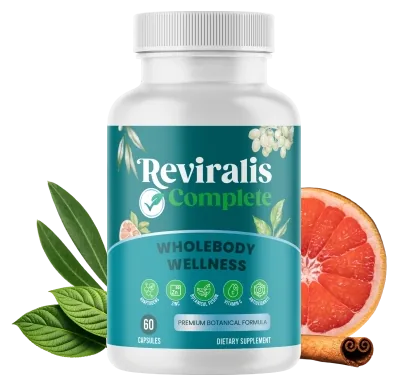
Vitamin D comes from sunlight on skin, from a few foods and from supplements. How much you make depends on the season, your skin and time outdoors, so a blood test is the way to learn your level. The adult RDA is 15 mcg to age 70, and the upper limit is 100 mcg. Reviralis prints 2.5 mcg per serving.
Written by the Goreviralis label deskUpdated · 5 min read
Where does vitamin D come from: sun, food or both?
Both, plus supplements. Skin makes vitamin D when sunlight reaches it, and food adds some, mostly from fatty fish, eggs and fortified products such as milk and cereal.
Picture a desk worker in November: leaves off the trees, a coat on, a commute in the dark. The skin has little chance to make much, and the plate has to do more. In summer, a short walk at midday does more than a vitamin pill might.
The NIH's Office of Dietary Supplements lists the adult RDA at 15 mcg (600 IU) up to age 70, with an upper limit of 100 mcg (4,000 IU) (NIH ODS, Vitamin D). The upper limit matters because vitamin D is stored in the body, and too much over time is a problem.
What changes how much vitamin D you make from sun?
Season, latitude, time of day, skin tone, age, clothing and sunscreen all play a part. No single number fits everyone.
| Factor | Effect |
|---|---|
| Winter and far-north places | Sunlight is weaker, so the skin makes less. |
| Darker skin | More pigment slows production, so more time may be needed. |
| Age | Skin makes less vitamin D as people get older. |
| Clothing and shade | Covered skin makes none. |
| Sunscreen | Reduces production, though most people do not use enough to block it all. |
Do not trade sunburn for vitamin D. Burns raise skin-cancer risk, and sun is also a listed cold sore trigger; see sun protection and lip health.
Should you get a blood test for vitamin D?
A blood test is the only way to know your level. Ask a clinician if you have a reason, such as little sun, a restricted diet, a bone concern or a medical condition.
A level that looks low in winter may be normal for you in summer, so a clinician looks at timing and history. Do not self-treat with a large dose. Ask what the result means and when to repeat it.
- Write down any supplement you take, with the dose in mcg or IU.
- Check units: 1 mcg of vitamin D is 40 IU.
- Ask whether a food change would be enough.
Reviralis: from $49 a bottle60 capsules a bottle · 2, 3 or 6 bottles · free US shipping on 3 and 6 · 60-day money-back guarantee
See packsWhere does the 2.5 mcg on the Reviralis label fit?
It is a small amount: 2.5 mcg, which is 100 IU and 13% of the daily value, in a serving of two capsules. It is about one-sixth of the 15 mcg RDA.
Next to the printed amount sit 21 other vitamin and mineral lines and an 18-name proprietary blend of 661 mg, the amounts of whose names are not printed. The vitamin D line is not in the blend, so it is the printed amount. The label does not tie it to bones, mood, immunity or any disease, and no source tests Reviralis itself.
If your clinician finds you low, 2.5 mcg is not the amount that closes a gap. Ask about the right dose, and count vitamin D from every product you take. Our vitamins A, C, D and E page shows the line beside the others, and the post on the low vitamin D dose goes deeper.
What should you ask a pharmacist or clinician about vitamin D?
Ask whether your level, diet and medicines call for a supplement at all, and what dose. Keep taking prescribed medicine while you ask, including any antiviral.
- Is my current intake from food and sun likely enough?
- Do my medicines or conditions change the dose?
- Which units does the label use, and how much do all my products add?
- When should I retest?
The Reviralis label says to consult a healthcare provider before use if you take prescription medicine or have a medical condition. See our medicine check page for what to bring.
FAQ01
Questions about vitamin D
How much sun do I need for vitamin D?
There is no one answer, because season, latitude, skin tone and age change it. Short, regular time outdoors helps many people, and burning never helps. A clinician can say whether you need food changes or a supplement.
Which foods have vitamin D?
Fatty fish such as salmon, egg yolks and fortified foods such as milk, some cereals and some plant milks are common sources. Check the Nutrition Facts panel, which lists vitamin D in mcg.
Can you get too much vitamin D?
Yes. The adult upper limit is 100 mcg (4,000 IU) a day from all sources, and excess is stored in the body. Check every product you take, and ask a clinician before adding a high-dose supplement.
Is vitamin D in a multi-ingredient capsule enough?
That depends on the amount. The Reviralis label prints 2.5 mcg per serving, 13% of the daily value, which is well under the 15 mcg RDA. A blood test and a clinician can tell you whether you need more.
Do vitamin D levels change by season?
They often do, rising after summer sun and falling in winter in many places. That is why a clinician reads a result alongside the time of year and your history.
Who wrote this02
Written and reviewed by
Pages built from the label, the sales page and linked NIH, CDC, FDA, FTC, Mayo Clinic and peer-reviewed sources.
Last updated . Read our editorial standards and how we check reviews. This website is the information site for a U.S. stocking partner for Reviralis. It is not the manufacturer or the distributor named on the label. We earn money when you buy through our order links.
Keep reading
More about Reviralis
U.S. stocking partner for Reviralis
Ready to try Reviralis?
Check your medicines with your pharmacist first, then pick a pack. Six bottles cost the least per bottle; three and six ship free in the US; every pack carries the 60-day money-back guarantee. Keep taking any prescribed antiviral exactly as directed.
- Secure checkout on the sales site
- 60-day money-back guarantee
- Ships from the U.S.